
How Gambling Operators Verify Age and Identity During Sign-Up
- Mason Phillips
- 10 min read
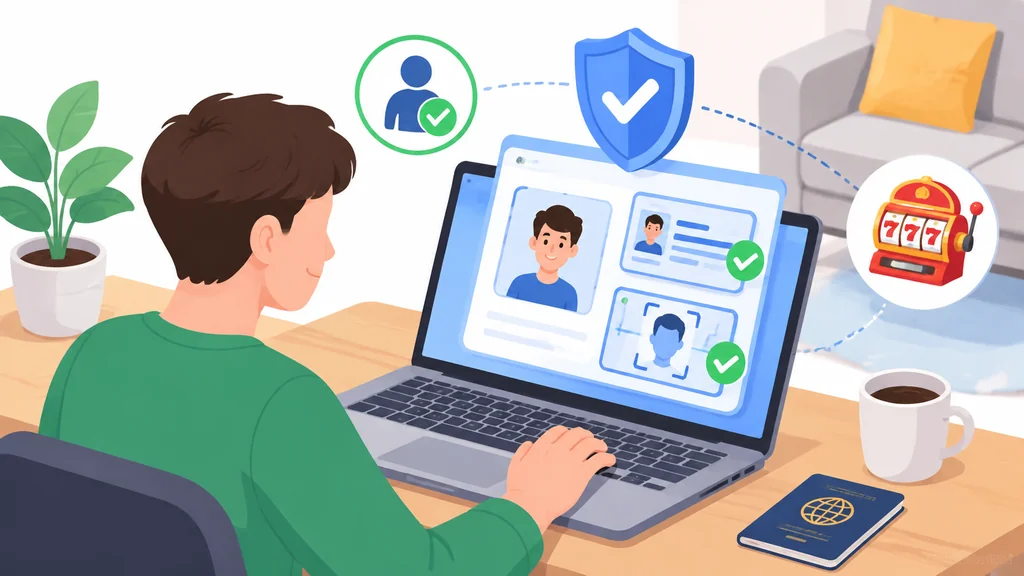
Gambling age verification at sign-up works through a match between the details you type and records held elsewhere, and a request for a document comes only when that match fails. The operator has to settle two questions at the same time, whether you are old enough for the market its licence covers, and whether the name, date of birth and address on the account belong to a real person. Everything after that point, including a request for proof of address or a selfie, follows from how the first check came out.
What Age and Identity Checks Are Meant to Confirm
Age is the first thing a registration form tests, and the threshold is not a global number. Age requirements vary by jurisdiction, so a form can only apply the rule attached to the territory the operator serves. That is why the country field carries almost as much weight as the date of birth field, and why a mismatch between the two is one of the quickest ways to stall a sign-up.
Identity is a separate test. A date of birth on its own proves nothing unless the record behind it belongs to the person filling in the form, so the check looks for a name, a date of birth and an address that appear together in independent records. That is why a form asks for the middle name you never use, and why a nickname is a poor bet for a clean match.
Location matters for a third reason. Operators restrict access by jurisdiction, so the address you enter and the network you connect from both feed into the territorial part of the check.
Some operators may perform additional checks during onboarding. Whether that happens at your operator depends on its terms, and support can tell you which checks ran on your account.

How the Checks Run in Principle
Checks run in one of two ways, and confusing them is easy. The first is an electronic match, where the operator sends the name, date of birth and address from the form to an identity service that compares them against reference records. The service returns a match, a partial match or no match at all, and the operator’s system then decides whether to pass the account through, ask for a document or hold it in a manual queue. Files of that kind are built from sources such as credit reference data, address records and, in some countries, government registers.
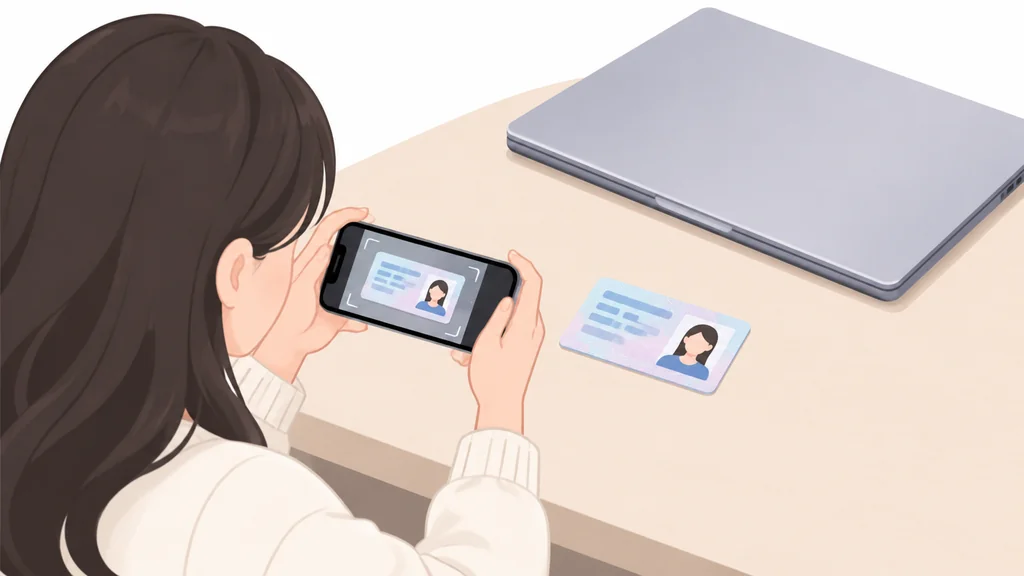
The second mechanism is a document check. You photograph a passport, driving licence or national identity card, and a reviewer or an automated system reads the machine-readable zone and compares the portrait and the details with what you typed. A selfie or a short liveness check can be paired with that step, so the person holding the document is the person in the photograph. A document check confirms the document; a liveness check ties it to a face.
Nothing in that process is unique to gambling. The same pattern sits behind bank account opening and rental applications, which is why the identifier you are asked for is a name plus a date of birth plus an address.
The name in the licence footer tells you whose conditions apply, and local rules set the expectations for what a sign-up check must cover. Testing marks you may see lower down the page relate to the games and their random number generation.
Verification and authentication do different jobs. Verification establishes who you are once, at sign-up or at a later review. Authentication is the password or the code that proves, on each visit, that the person logging in is the one who passed that check.
The Sign-Up Verification Process, Step by Step
The order below is the part you control. What happens inside the operator’s systems depends on the identity services it uses and the market it is licensed in.
- Check the licence footer and the terms page first. Confirm that the licence covers the country you are actually in, and note the regulator’s name in case you need it later.
- Enter your legal name exactly as it appears on the identity document you plan to use, including middle names, and give your date of birth in the format the form asks for.
- Use an address you can prove with a document, and keep the spelling consistent with that document. Abbreviations and postal formats are a common source of failed matches.
- Submit the form and watch what happens immediately afterwards. A prompt for documents means the automatic match did not succeed, and that is the point to slow down and read the request carefully.
- Upload exactly the document type the request names, photographed flat, in colour, in good light, with the edges of the card visible and no glare across the text.
- Follow up with support if the status does not change, and ask which specific detail failed to match. Opening a second account while a review is open makes the review harder to finish.
- Keep a note of the date you sent the documents and the reference number from the support reply. That record saves time if the account is reviewed again later.
Once those steps are done, the rest is administration. The account is either cleared, held for a manual look or refused, and the last of those outcomes is usually tied to a record rather than to anything you typed.
Why a Check Comes Back
The causes are mundane. A middle name left out, a maiden name still on a bank record, a hyphen dropped, a street written as “St” in one place and “Street” in another, or an address you moved into recently that has not yet reached the files the identity service reads. A document photographed on a dark table, with a finger over the corner or a reflection across the number, can fail for reasons that have nothing to do with you. Say you moved from Canada to Australia and your bank statement still shows the older Canadian address. That single detail can be enough to produce a partial match and a manual review.
A date of birth that does not match the reference record stops the check on its own, and the mismatch frequently traces back to a typo in a single digit rather than to anything deliberate. Ask support which field failed, correct that field on the account, and resend only what was requested. Sending a bundle of documents that nobody asked for slows the review down and adds new details that can conflict with the record.
Self-exclusion is a different kind of stop. Operators in markets that share a self-exclusion register can refuse an account as soon as a name matches. If you have self-excluded somewhere else, tell support and ask what your options are, because a fresh account does not remove the older record.
How Verification Interacts With Payment Methods
Payment details act as a second identity signal, and a mismatch there can trigger a review even after the sign-up check has passed. A card payment carries the cardholder name, so a card held in one name and a casino account in another invites a question. Wallet accounts carry their own verified identity, which is part of why they show up as cashier options. The payment side of the account is checked the same way regardless of the game being played.
The order of events matters more than the method. Whether you can withdraw before verification finishes depends entirely on the operator’s terms, so read the cashier section before you deposit, and ask support to confirm the sequence if the terms page is vague. Some sites hold a withdrawal until the account is verified, others let you play while a review is open, and the only reliable answer for the site you are on is the one written in its own terms. A wider comparison of methods, fees and processing times sits in this site’s guide to online casino deposit methods, and the identity check happens upstream of every option listed there.
One habit holds across methods. Use a payment account in your own name, matching the name on the casino account character for character, and keep the funding source consistent between deposits and withdrawals. A card used for the deposit and a wallet used for the withdrawal is a common trigger for an extra review.
Where Support Features Fit In
The responsible gambling tools on a casino account depend on the account belonging to a verified person. A deposit limit, a session reminder or a self-exclusion order is only meaningful if the operator knows who set it, which is why the identity record and the player protection record are often handled by the same support queue. A limit attached to an account that turned out to belong to somebody else protects nobody.
The range of tools on offer, from deposit limits to time-out periods, is set out in this site’s post on tools and features supporting responsible gambling, and it is worth reading alongside the verification page, because the two overlap more than people expect. If a failed check has left you thinking about a break instead of a resend, a conversation with a helpline can be a useful next step, and this site’s account of what happens when you call a problem gambling helpline explains the shape of that call.
Underneath all of it sits a simple arrangement. Verification may be needed to apply or enforce some account protections, including limits, cooling-off periods or exclusions.

Gambling Age Verification FAQ
How long does gambling age verification take?
An automatic match can clear while you are still on the registration page, and a document review takes longer because it waits for a person or a queue. No single number applies across operators, so a fixed estimate would be guesswork. Check the operator’s help pages for a review window and ask support for a status update if the wait grows.
What documents do I need to verify my age?
A passport, driving licence or national identity card may be requested to verify age, with proof of address such as a bank statement or utility bill requested separately. Ask support which version of a document is accepted if yours is a paper licence or an older card.
Can I withdraw money before my account is verified?
Some operators process a withdrawal only after the identity check clears, and others release a first withdrawal while a review is still open. The applicable condition depends on the operator’s terms and the site you are using.
Why did my identity check fail when my details are correct?
Details that are correct in your head can still differ from the record an identity service holds. A missing middle name, a recently changed address, a married name on one document and a maiden name on another, or a card photographed with glare across the text will each produce a failed match. Ask support which field failed, fix that field on the account, then resend.
Can I sign up for a casino while using a VPN?
A connection that points somewhere else can create a mismatch between your address and your location, and location discrepancies may trigger an operator’s internal review. If you travel often, ask support what the operator needs from a player whose location changes, because an account opened from outside the licensed territory can be refused.